
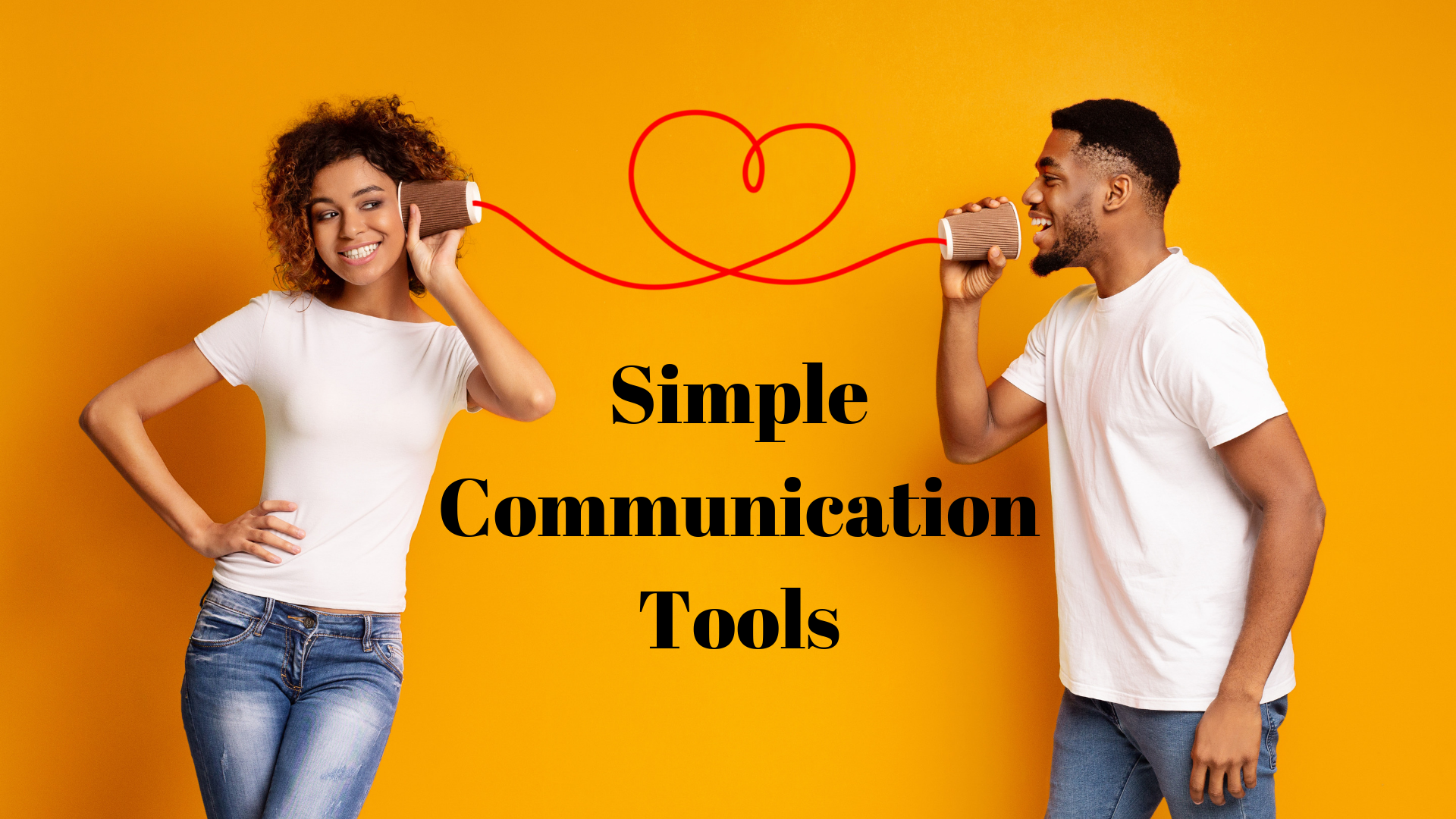
 How good are you at mind reading? How about your spouse? If you’re anything like us, you find mind reading to be a really frustrating experience — for BOTH spouses! That’s why we sometimes need to use communication tools to help us stay away from this type of harmful tactic.
And that’s what we want to give you within this Marriage Insight. Below you will find simple relational tools to help you communicate with each other in healthy ways. But first, please note the following:
 FYI: This info is available in Podcast form. To listen, instead of reading this Marriage Insight, just click on the Podcast button to the right. →
Now that we’ve given you that option we want to ask you: How many times have you heard (or said) similar statements to these:
“Well, he (or she) should know how I feel about _____ and how it would upset me.”
“He (or she) has eyes and must see that I could use help. Why do I have to ask for it? No one would have to ask me!”
“If I have to ask for _____, why bother? Do I have to spell out everything I need from him (or her)?”
Do any of the above statements and questions sound familiar to you? In our many years of marriage, we’ve foolishly used them all, plus many other faulty communication “skills” that we shouldn’t have used. This includes expecting the other spouse to read our minds. We’ve found (the hard way) that it’s true what Sandra Aldrich wrote:
“When mind reading is taken out of the marriage as an expected form of communication, husbands and wives and families can be spared a multitude of unnecessary frustration.” (Sandra Aldrich)
The question is: Are you sparing your spouse and family this frustration?
Wise Communication Tools
Which one of us will volunteer to enter into frustrating situations with each other? And yet that’s just what we do when we play stupid little mind games with each other. In the Bible God tells us:
“By wisdom a house is built, and through understanding it is established. Through knowledge its rooms are filled with rare and beautiful treasures. A wise man has great power. And a man of knowledge increases strength. For waging war you need guidance, and for victory many advisers.“ (Proverbs 24:3-6)
Are you being wise in the ways that you “wage war” with each other? That certainly should be our goal.
So to help us to wage a victorious “war” against miscommunication, we’ll be sharing with you several simple communication tools that some gifted advisers highly recommend we use.
Here’s one idea that comes from Dr Steve Stephens:
“‘Often when we get flustered, we don’t listen to each other,’ Stephens said. ‘And then even when we start to listen we interrupt the other person. ‘He suggests that couples flip a coin to determine who will talk first. The winner of the coin toss then has three minutes to talk without being interrupted by the other person. At the end of those three minutes, the other person has three minutes of uninterrupted time to respond.'” (From article “Fight Fair in Marriage” posted at CBN.com)
Additionally:
Here’s another communication tool comes from the Smart Marriages web site. In their article, a woman explained the following technique, which helped her and her husband. They use it “when faced with daily decisions like: ‘Would you like to watch a movie?’ or, ‘Should we have my parents over Thursday?’ …etc.” The wife explained:
“Sometimes it can be difficult to determine exactly how the other person really feels based on his/her response.’ So to take the guesswork out of the decision-making equation, we quantify our feelings about a particular proposal by ‘doing the numbers.’
Here’s how it works:
- “Formulate and state the question. State, ‘How much would you like ____?’ And then end it with a statement of action like ‘to watch a movie? – or – ‘to have my parents over Thursday?’
- “Pause a moment to come up with a number between 1 and 10 that quantifies your feelings about the activity under consideration. Zero means that under no circumstances do you want to do it. Ten means you definitely want to do it. Five means you’re completely neutral.
- “When both spouses have a number in mind, count out loud to 3. And then state your respective numbers.
- “If the total of your numbers is 11 or greater, then do the activity. If the total of your numbers is 10 or less, then don’t do the activity.
“With this system you don’t end up doing things that neither of you really cares to do, nor does the more forceful personality inadvertently impose his or her will on the more reticent or easygoing spouse. Because you share your numbers at the same time, it’s possible to express an honest assessment of how much or little you want to do something without there being as much pressure. Plus, it’s an easy enough tool for anyone to use. You can even have an index card on your refrigerator that outlines these basic steps. That way it’s handy to pull out and use whenever it’s needed.”
Here’s another simple communication idea:
“Choosing a restaurant can be a source of frustration for many couples. How often has this conversation played out at your house: ‘Where do you want to go?’ … ‘I don’t know, where do you want to go?’
“Next time you find yourselves at a stalemate, try this method: If your spouse asks where you’d like to eat, give three options. He [or she] may either select one of the three or ask if you’re willing to reverse roles.
“If you agree to switch roles, you must list three options from which he [or she] can choose. Or if you don’t agree, he [or she] must choose from the original three.” (Tom Kennedy, from the Marriage Connection)
Sandra Aldrich’s book Men Read Newspapers Not Minds (which is now out of print) gives another Communication Tool you could use. It’s called:
The Creative Number Technique:
“While trying to make a decision as to whether to attend a family event my friend’s husband’s gentle resignation caught her attention. As she pondered the dilemma, she turned the invitation over. She drew a chart — five squares in a row, numbered 1-5. Then she labeled each square:
- I really don’t want to do this.
- I don’t want to do this. But I’m willing to talk about it.
- I don’t care one way or another.
- I’d like to do this, but I won’t die if we don’t.
- Yes, this is very important to me.”
This lady’s husband surprised her with how strong he felt on the issue. After discussing the subject further, they came up with a plan that made them both agreeable with the decision. And as Sandra shares, “That good bonding time would never have happened if she hadn’t come up with a better way to communicate with her husband.”
This simple tool can also be written on an index card and put somewhere close for handy reference at the appropriate time.
Another communication tip you might use:
“Make a deal with your spouse that when you resolve the conflict, you will do something together that you both enjoy. This could be going out to dinner, watching a movie, or anything else that will motivate you to find a resolution quickly. And then reconnect to each other in a loving way. ‘It just makes it a positive thing. This is because a lot of times arguments can go on forever and ever,’ Dr Steve Stephens said. ‘This way, you get a resolution and then just move on.'” (From the CBN.com article “Fight Fair in Marriage”)
Yet, Another Communication Tool
We communicate with each other in different ways. One of them is something we call Couple Time Talks, or Couple Talk Times, etc. The point is to take some time to just sit down to talk to one another. It can be a 22 Minute Date Time, or a Pocket of Time where you talk together, etc. The point is just to talk to each other. Make it a point to sit together and talk. Here’s an idea that Dr David Clark wrote about that may help you with your Talk Times. He wrote:
“Many couples struggle having Couple Talk Times, with finding topics of conversation. They end up talking superficially or just sit there staring at each other. One couple has developed a system they call ‘the basket.’ They have a basket sitting on a side table in the room where they have their Talk Times. When each of them thinks of a topic of interest during the day, they jot it down or record it on their phone. When they get home, they write it on a note card and drop it in the basket. Also, they drop in the basket newspaper articles, magazine articles, pictures, photos… These notes and other bits of information are all potential topics of conversation.
“In a Couple Talk Time, after their brief prayer time and devotional reading, they pull out a topic from the basket. Some of these topics don’t lead to a deeper talk. But, some do. Give this a try and see if your basket of ideas/topics leads to deeper conversations.”
Need More?
Do you need more ideas to help you communicate with each other in healthy ways? Well, we have more! You can find the tools mentioned above, and EVEN MORE, by going to the article: Communication Tools for Couples. You’ll find quite the selection there that you can use—all for free.
Plus, if you want even more tips like these you can find them in the COMMUNICATION TOOLS topic. Also, if you have a communication technique that you’ve found beneficial in your marriage, please post it below to help others. It’s important to live, learn and pass it along so the positive ripple effect can multiply in its benefits.
“Others have done the hard work, and you have reaped the benefits of their labor.“ (John 4:38)
The Bible tells us, “Pride only breeds quarrels, but wisdom is found in those who take advice.” (Proverbs 13:10) We pray the above tools will help to leave pride behind and truly work toward approaching communication wisely.
Cindy and Steve Wright
— ADDITIONALLY —
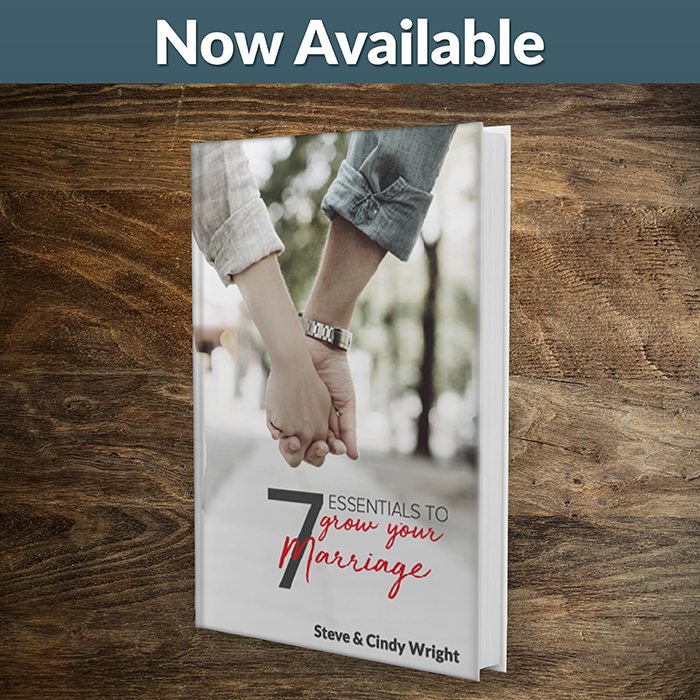
We give a lot of personal stories, humor, and more practical tips in our book, 7 ESSENTIALS to Grow Your Marriage. We hope you will pick up a copy for yourself. (It’s available both electronically and in print form.) Plus, it can make a great gift for someone else. It gives you the opportunity to help them grow their marriage. And who doesn’t need that? Just click on the linked title or the picture below to do so:
ALSO:
If you are not a subscriber to the Marriage Insights (emailed out weekly)
and you would like to receive them directly, click onto the following:







Filed under: Communication Tools
(UNITED STATES) I think this is a really good exercise to try for communicating (and for those who haven’t read it yet; the number steps). I tend to be the more overbearing one when it comes to talking things out in our relationship. My poor husband never says no to me but keeping in mind everything that was stated I’ll try and see if he’d like to try this exercise. I’m hoping he does and if not then I’ll try to keep in mind not to “force” him to say yes. Thank you for the steps and good luck!
(USA) When I try to ask him what I should do about a particular thing or what we should do, he usually says I don’t care or I don’t know. And when I continue to ask him "well, what should I do or we do" then he just gets mad and then talks to me in a derogatory tone. This is most of the time and lately it’s worse.Then I get depressed and feel like our marriage is hopeless.
I know he is frustrated because he lost his job 2 years ago and things haven’t been the same financially. But he talked to me this way since we got married 2 years ago, just not as often.